A trusted system that turns
complexity into confident action
We help you create better enterprise AI systems to make better decisions and get important things done—faster, more affordably, and with less uncertainty.
4 products shipped · 35+ years experience · Pacific Northwest based
Meet Ingemar

Ingemar Anderson
Helping People Turn Ideas Into Reality
For more than 35 years, Ingemar has worked at the intersection of technology, business, and problem-solving — from electronics and software development to project management, entrepreneurship, publishing, and AI. He holds a bachelor's degree in computer science from Rosenheim, Germany, and an MBA in Finance from California Lutheran University.
Today, he leads Reprospace, a company that has evolved from an offset printing & graphic design company into a cutting-edge business software development, publishing services, AI-powered tools, and digital transformation company. His career spans work with Capgemini, Calypso Medical (now Varian), Boeing through Sila Consulting, and global Electronic Data Interchange (EDI) systems at Siemens — across Europe, Asia, and North America.
He is the author of four published books, a judge at the University of Washington Buerk Center for Entrepreneurship, and an active member of the Greater Kitsap Chamber of Commerce.
Four Products. One Thesis.
AI should give ordinary professionals access to capabilities that used to belong only to the well-resourced few. Each product proves it.
Food Bank City
Charity logistics for nonprofits
Free food-bank management software for organizations priced out of enterprise logistics tools. USDA-reporting compliant, multi-tenant, sponsored by Virginia Mason Franciscan Health and Central Kitsap Food Bank.
mylaw.studio
Legal documents for everyone
Professional legal documents for individuals and small firms priced out of traditional counsel. $5 per document, $25 per custom request.
Literary Cloud
Publishing operations, free for life
Publishing management for mid-sized and independent publishers priced out of internal tooling. Manuscript tracking, royalty calculations, and production pipelines — free forever.
AI Trader Studio
Algorithmic trading for retail investors
Algorithmic trading tools for retail investors priced out of institutional platforms. Build, backtest, and deploy strategies — free for paper trading.
Software We've Built
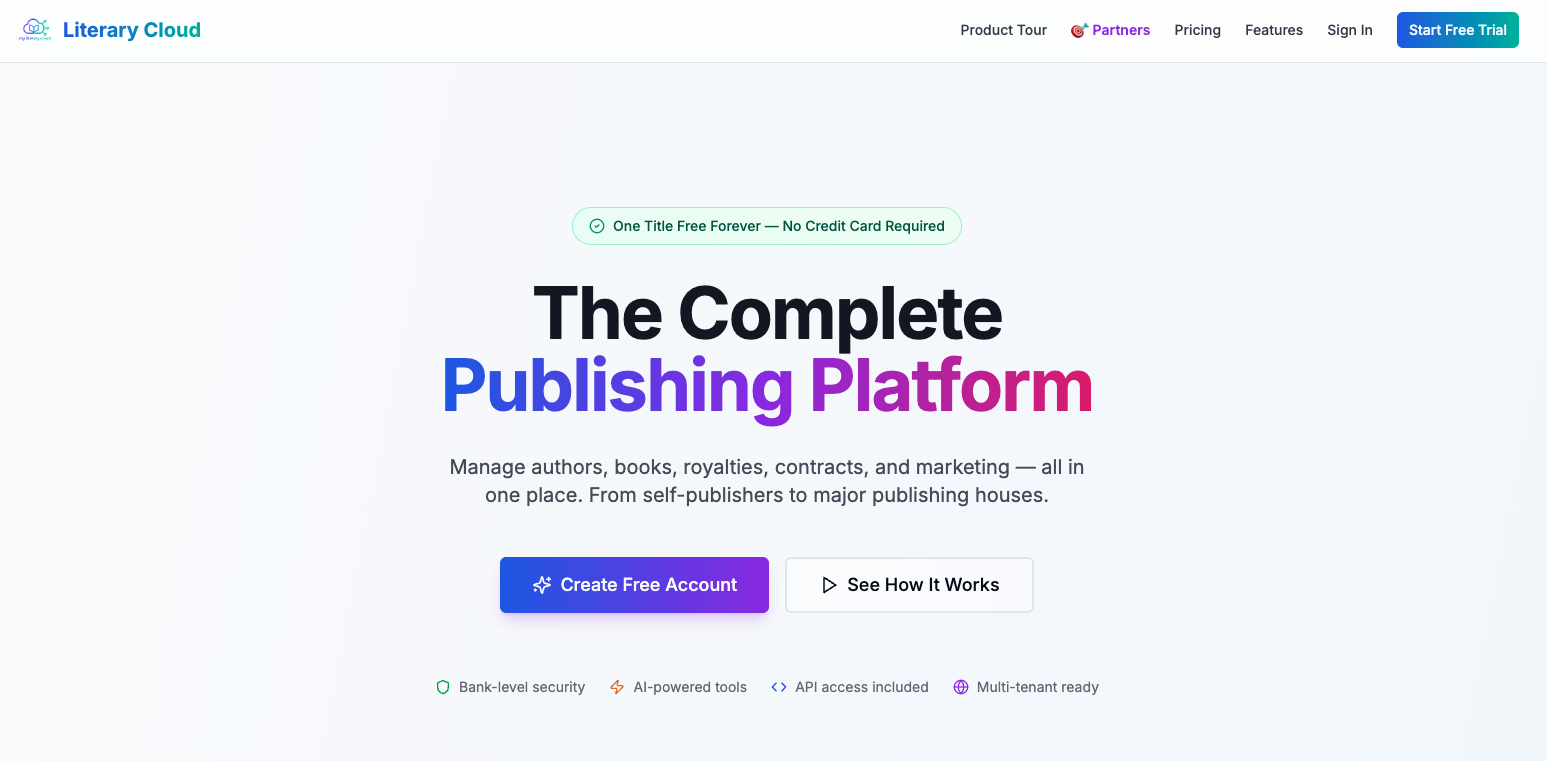
Literary Cloud
A comprehensive publishing platform built for literary publishers — managing manuscripts, contracts, royalties, and author relationships in one intelligent system.
Visit Literary CloudAI Agents
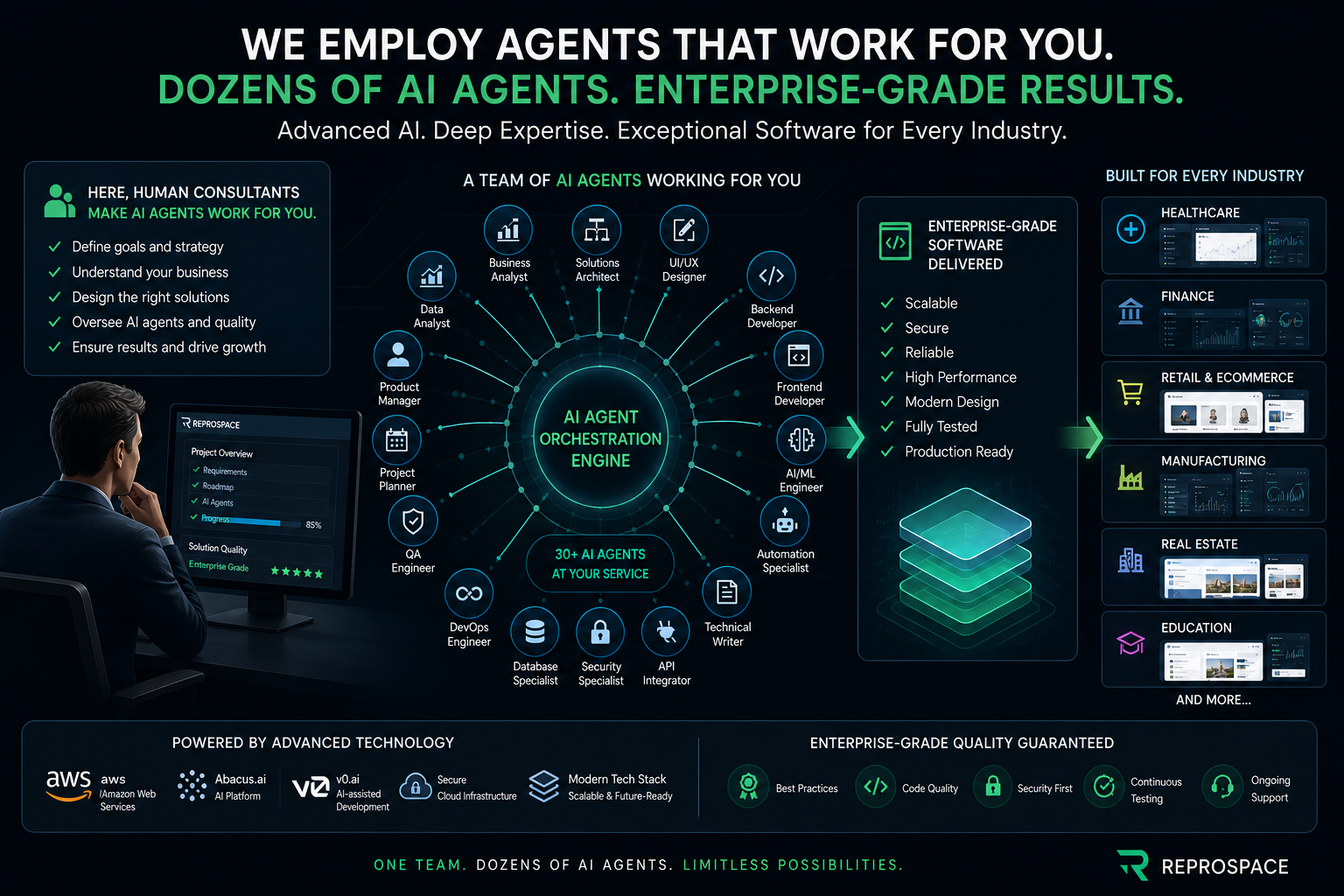
Reprospace combines human expertise with the power of advanced AI agents to deliver enterprise-grade software at unmatched speed and efficiency. Our consultants design, guide, and oversee a network of specialized AI agents—each handling critical tasks like development, design, data, and automation. The result is a highly coordinated system that produces scalable, secure, and production-ready solutions across industries. You get the output of an entire expert team—driven by one strategic partner focused entirely on your success and system reliability.
System Uptime
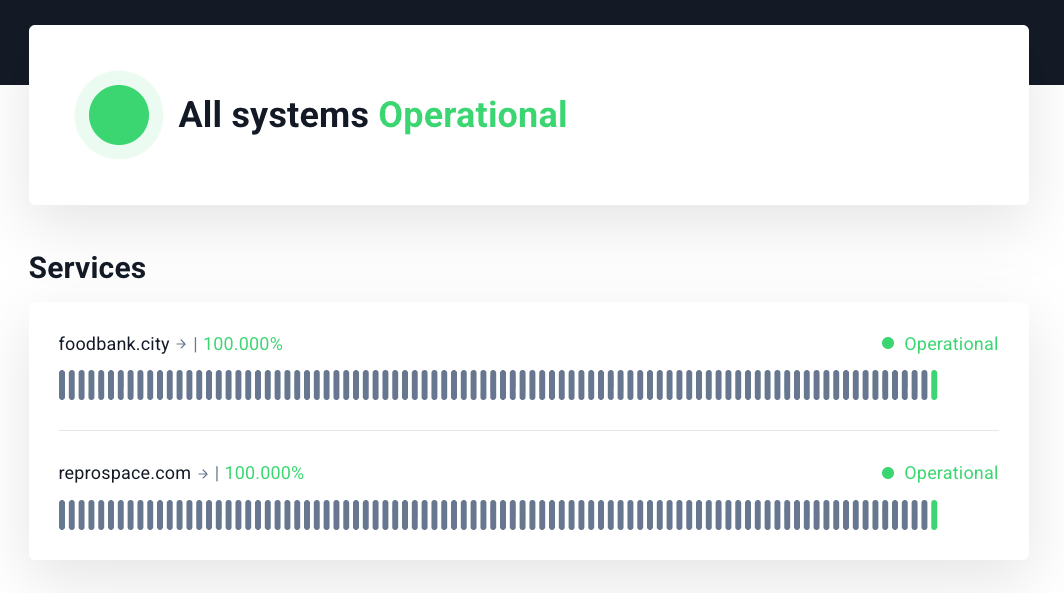
System Up Time is one of the most critical metrics for every software client. This is why we publish the uptimes in real-time for all our applications here. Please feel free to contact us with any questions at https://reprospace.com/contact.
Project Management
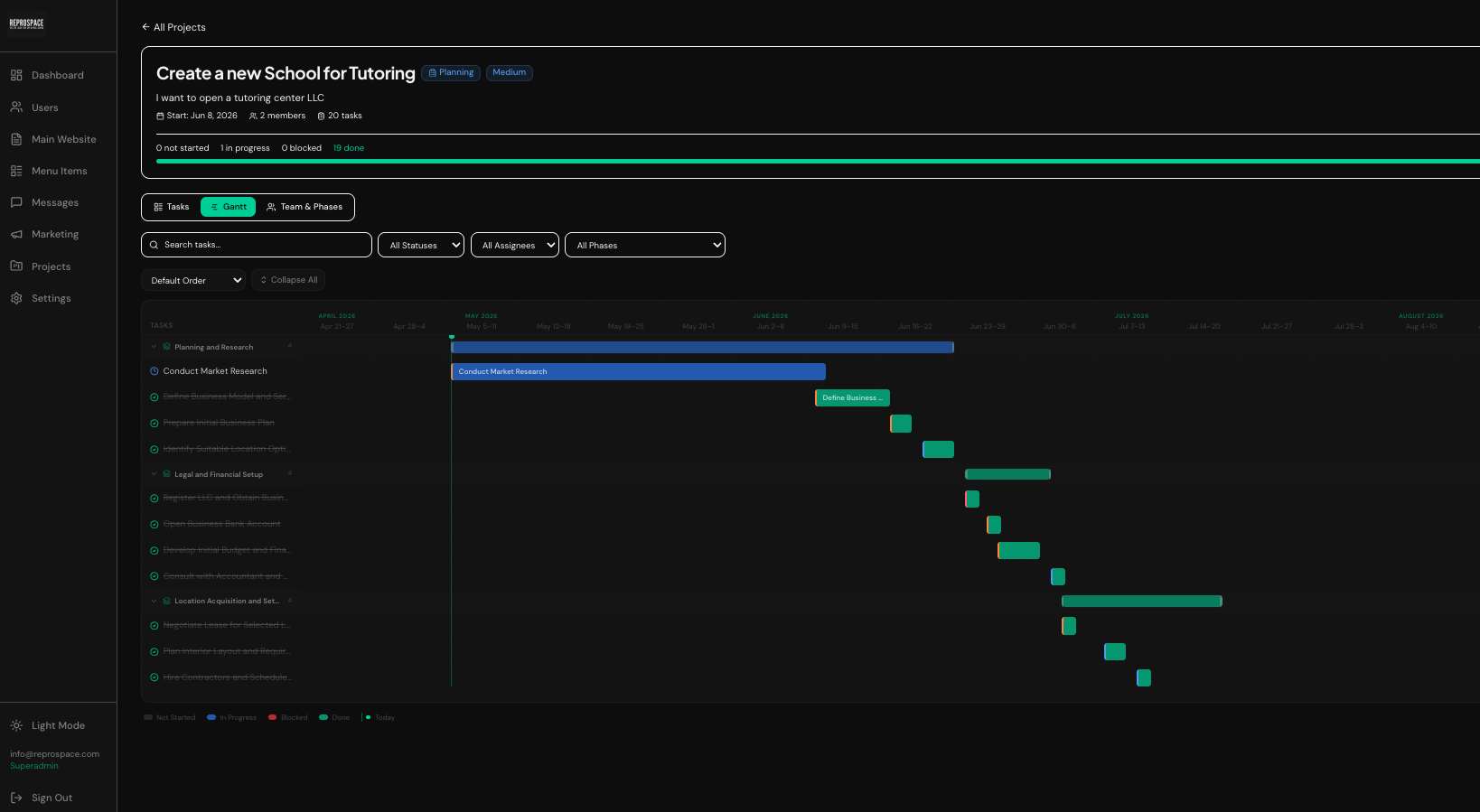
We have developed our own project management software that provides AI-powered tools for planning, tracking, and managing the most complex AI projects. We use this tool every day and offer it to every client with access to a powerful, enterprise-level project management platform at no additional cost. Built to support modern AI-driven software development, the system includes advanced planning, collaboration, task tracking, documentation, milestone management, workflow automation, and real-time project visibility.
Vertical Solutions
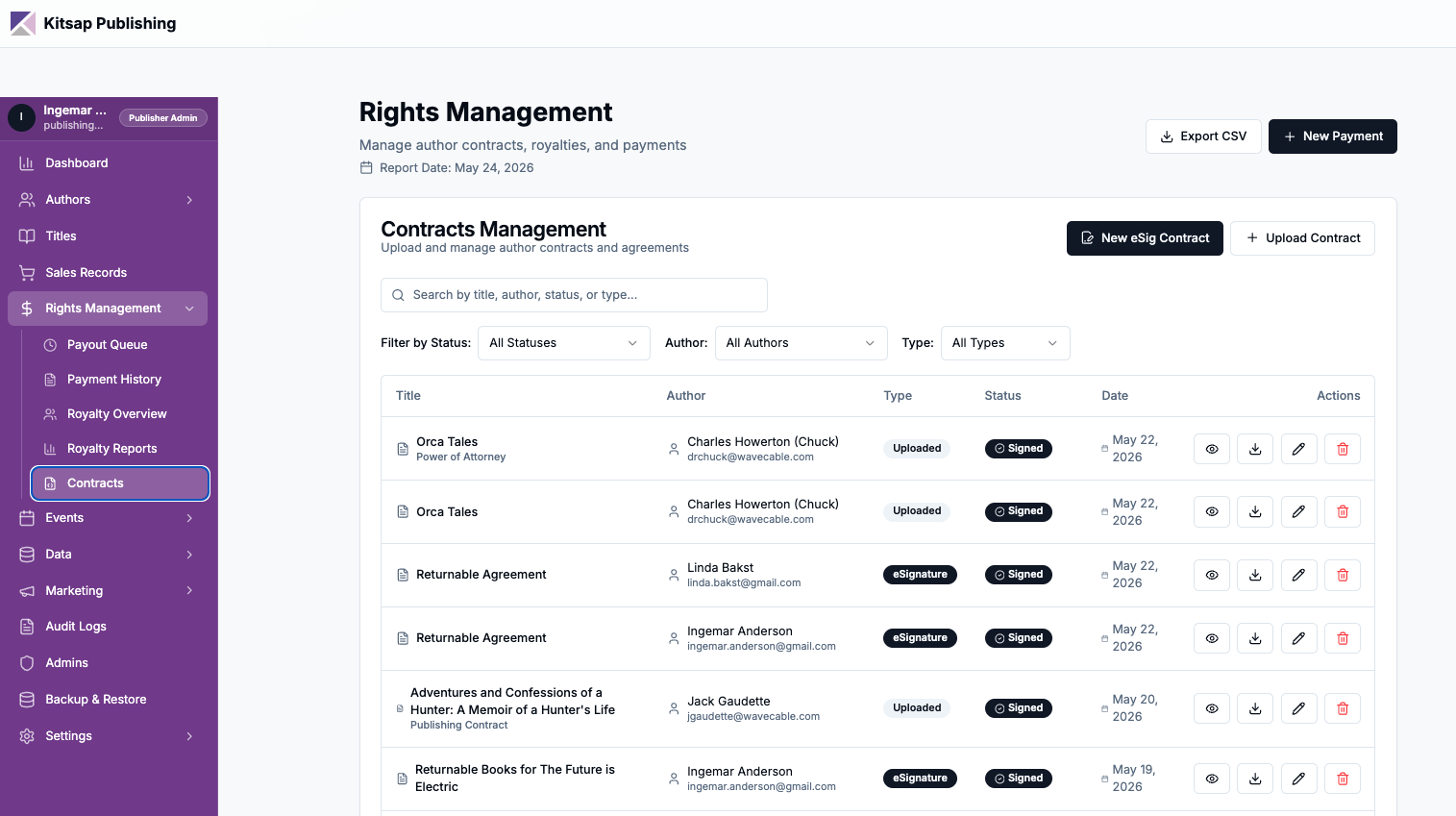
All software runs on systems built for your industry. Yours Shouldn't Be Held Together With Spreadsheets.
Literary publishers manage an intricate web of processes: manuscript submissions, peer reviews, author contracts, royalty calculations, rights management, and production schedules. Most cobble this together with email threads, shared folders, and decade-old software that no one loves. The result: missed royalties, slow author communication, and staff burning hours on admin instead of discovering great books. Reprospace built Literary Cloud — a complete publishing operating system — to replace that chaos. Manuscript tracking, contract lifecycle, royalty automation, and author portals, all in one platform. Built with AI speed, hardened with enterprise-grade security and uptime monitoring. Used by real publishers today. What publishers get: Manuscript pipeline — submissions → review → decision, tracked end-to-end Contract & rights management — auto-generated contracts, rights tracking, renewal alerts Royalty engine — calculate, report, and disburse royalties without spreadsheet gymnastics Author self-service portal — authors check submission status, view statements, upload revisions Production scheduling — from acquisition to bound book, every milestone visible Proof point: Visit Literary Cloud → — live, in production, serving publishers today.
Memberships
.png)
Ingemar Anderson is proud to be an active member of the Greater Kitsap Chamber and a supporter of local businesses, nonprofits, authors, and community initiatives. We believe strong communities are built through collaboration, shared intelligence, education, and entrepreneurship, and we are committed to helping communities like Kitsap County grow and thrive.
Through leadership in software, artificial intelligence, and publishing, we help local organizations and individuals bring their ideas to life, improve their operations, and make a lasting impact in our community and beyond.
The AI Building

Software development with AI is more complex thank traditional software dev.
Why Reprospace?
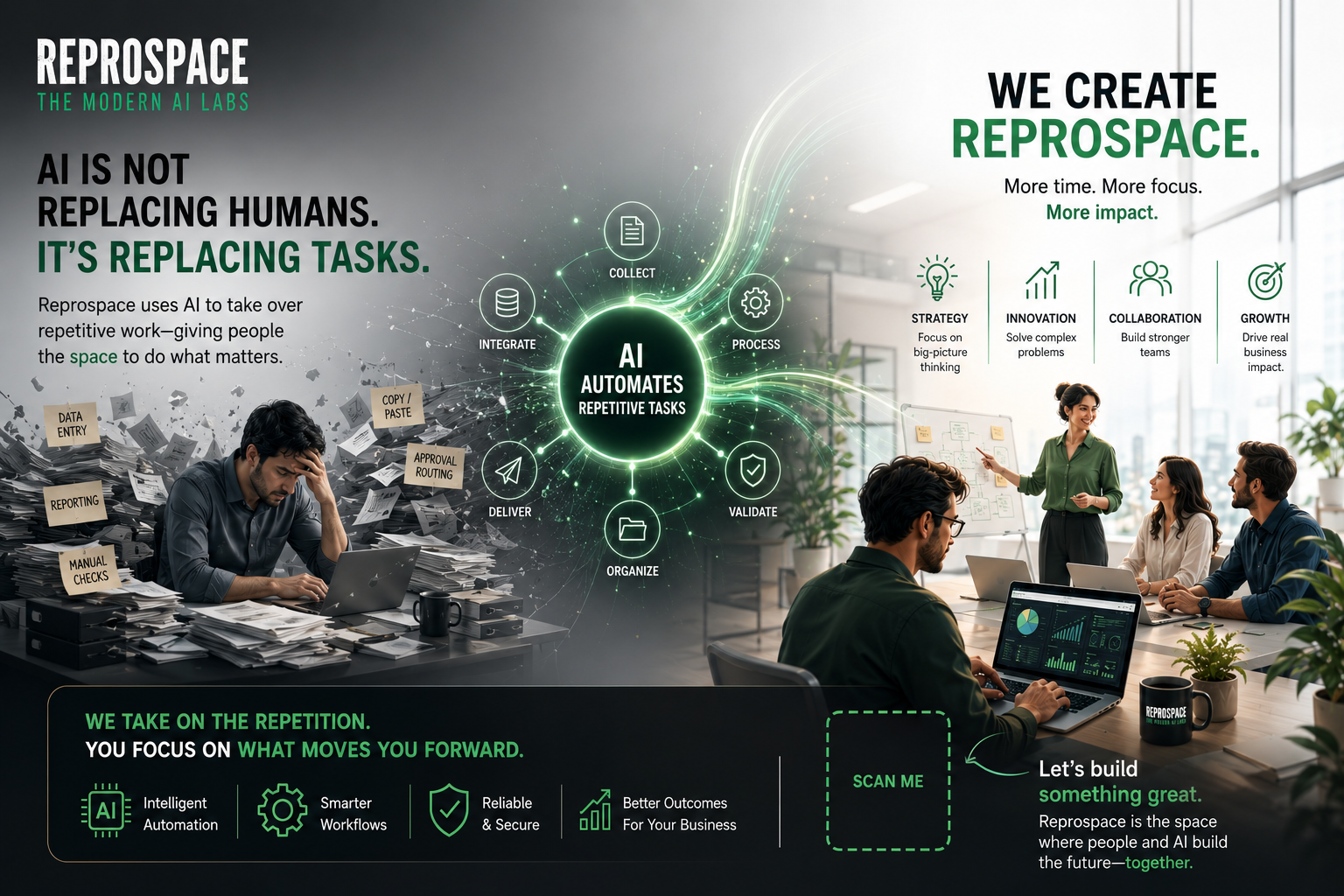
Reprospace is built on the idea that much of modern work is repetitive—tasks like data entry, document generation, and routine administration that consume time better spent on creativity and problem-solving.
We believe AI is most valuable when it takes over repetitive tasks, freeing people to focus on what they do best.
and
“Repro“ represents repeatable work, while “Space” reflects the freedom created through automation.
Our mission is not to replace people, but to remove the burden of routine tasks. Through AI strategy, automation, and custom software, Reprospace helps organizations shift focus toward higher-value work.
We aim to use technology to elevate human potential—creating space for innovation, collaboration, and growth.
Standard or Individual Solutions

In 1993,
I was becoming a computer scientist, finishing my senior year at the University of Applied Science in Germany, and I wrote a thesis on standard solutions such as SAP.
My research project turned out to be an insightful exploration into the balance between standardized and individualized information systems, particularly within business contexts. The book is structured as a thesis and delves deeply into the implications of standardization in information technology, with a particular focus on the software industry.
I set the narrative in an academic and corporate environment and examine how standardization affects business operations. And I interacted with academic advisors and employees of Rosenthal AG, a German manufacturer of porcelain products, to gather practical insights. Key topics include the analysis of software solutions such as SAP and discussions of system theory and evolutionary development.
Central themes involve the tension between efficiency and flexibility, and how these technological standards impact innovation and individuality within organizations. The book is analytical and methodical, suitable for readers interested in the systematic study of information systems and their practical application in real-world business scenarios.
Click on the book cover to discover and research in the book for free ...
Testimonials